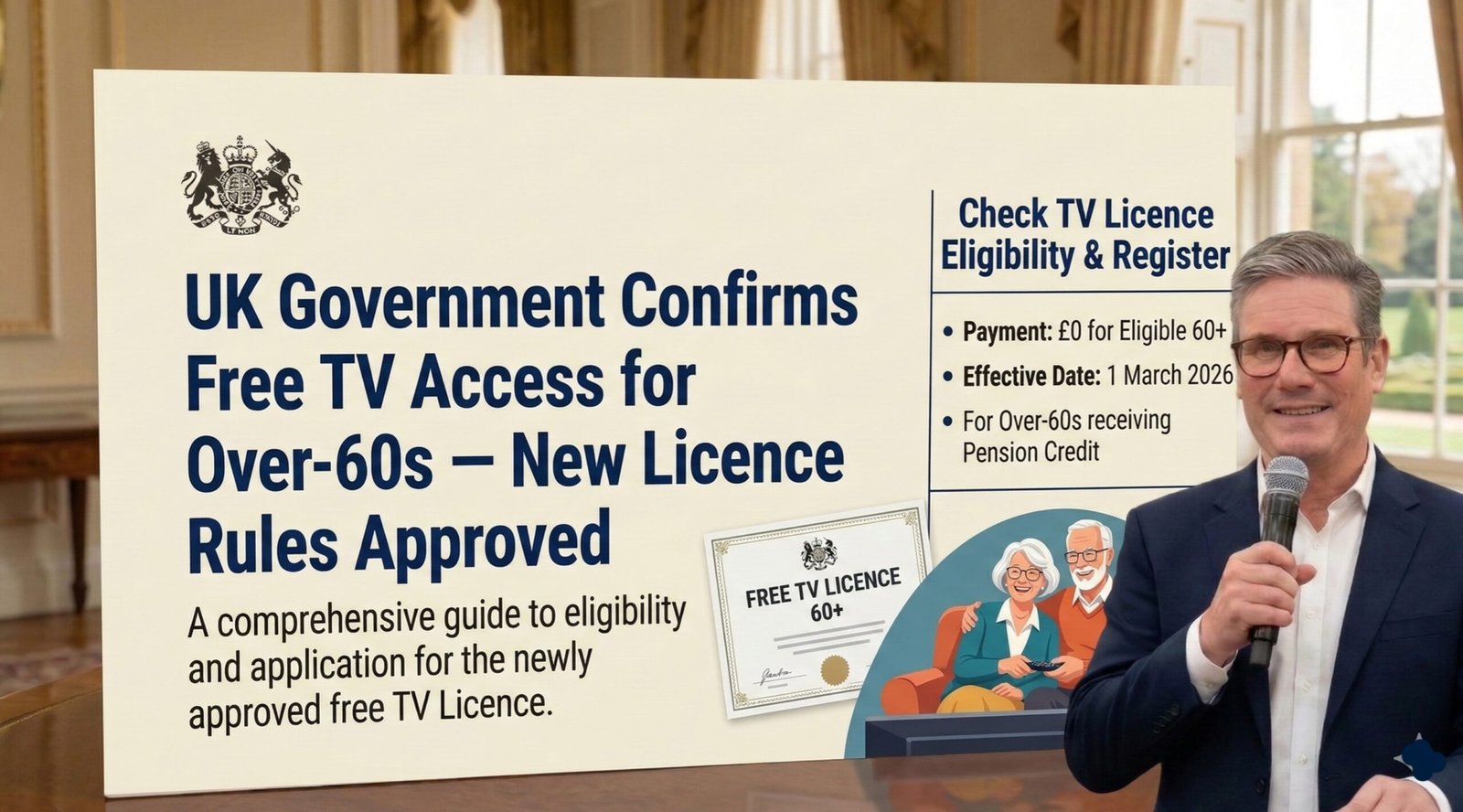
The conversation around the UK TV licence is often filled with confusion, especially for those reaching retirement age. For decades, the “free TV licence” was a staple benefit for older citizens, but policy shifts in recent years have made the rules a bit more complex. If you are over 60, or approaching that milestone, understanding exactly where you stand is essential to avoid unnecessary bills or, conversely, legal trouble.
While the headline “Free TV Access for Over-60s” often circulates in community groups and social media, it is vital to distinguish between political proposals, current legislation, and the specific eligibility criteria that actually trigger a waiver. Currently, the most significant change in recent history remains the shift from a universal benefit to a means-tested one. However, constant updates from the Department for Culture, Media and Sport (DCMS) keep the public on their toes regarding how these rules are enforced and who qualifies for help.
The Current Reality of the Over-75 Concession
To address the elephant in the room: there is currently no universal free TV licence for everyone over the age of 60. In fact, even the universal benefit for those over 75 was phased out in 2020. Today, to get a free TV licence, you generally need to be 75 years or older and be in receipt of Pension Credit.
For those in the 60 to 74 age bracket, the full fee of £169.50 per year typically applies. This often comes as a shock to those who remember the previous system where the “senior” benefit started much earlier. However, there are specific nuances to the law that allow certain households to reduce their costs or eliminate them entirely depending on their living situation and the benefits they receive.
How Pension Credit Unlocks Free Access
If you are 75 or over, the golden ticket to a free TV licence is Pension Credit. This is a means-tested benefit designed to help people on a low income. Even if you only qualify for a tiny amount of Pension Credit, it serves as the gateway to the “Over 75 TV Licence” scheme.
The government and the BBC have been under pressure to increase the uptake of Pension Credit because thousands of eligible seniors are not claiming it. By claiming this benefit, you don’t just get a top-up to your weekly income; you also save nearly £170 a year on your television consumption. It is a dual win for your household budget. If you are 74, you can actually apply for your free licence early so that it kicks in exactly when you hit your 75th birthday.
Rules for People in Sheltered Accommodation
There is a specific “hidden” rule that often benefits those over 60. It’s known as the Accommodation for Residential Care (ARC) concession. If you live in a certain type of sheltered housing, retirement complex, or a care home, you might be eligible for a “Small Hotel” style licence or a significantly discounted rate.
In these specific living arrangements, the cost can be as low as £7.50 per year. To qualify, you must be retired and over 60, or have a disability. This is one of the few areas where the age of 60 remains a primary threshold for a discount. If you live in such a scheme, the warden or site manager usually handles the application, so it is always worth asking them if the complex holds an ARC licence.
What Does the Licence Actually Cover
It’s a common misconception that you only need a licence to watch the BBC. The law is actually much broader. You need a TV licence if you watch or record programs as they are being shown on any TV channel. This includes “live” broadcasts on ITV, Channel 4, Sky, or even international channels.
Furthermore, you need a licence to use BBC iPlayer, regardless of whether you are watching live or on-demand content. However, if you only use your TV for Netflix, Disney+, or YouTube—and you never tune into live broadcast TV or use iPlayer—you might not need a licence at all. For many over-60s who are moving toward streaming-only habits, this can be a legitimate way to “cut the cord” and stop paying the fee legally.
How to Apply for a Free Licence
If you meet the criteria (75+ and on Pension Credit), the process isn’t automatic. You have to take action. You can apply online through the TV Licensing website or by calling their dedicated helpline. You will need your National Insurance number and evidence that you are receiving Pension Credit.
Once the application is processed, you won’t have to worry about it again for as long as your circumstances remain the same. The BBC and the Department for Work and Pensions (DWP) have improved their data-sharing systems, making it much easier to verify claims without requiring piles of paperwork from the applicant.
Discounts for Blind or Partially Sighted Users
Age is not the only factor that can lower the cost of your TV licence. If you or someone you live with is blind or severely sight-impaired, you are entitled to a 50% discount on the licence fee. This applies regardless of your age.
For a person over 60 who may be experiencing age-related sight loss, this is a crucial benefit to claim. You will need to provide a copy of the certificate of blind disclosure or a letter from your ophthalmologist. Unlike the over-75 concession, this discount applies to the entire household, meaning even if the sighted members of the family watch TV, the 50% reduction still stands because the registered blind person lives there.
The Impact of the Recent Fee Increase
In April 2024, the TV licence fee rose from £159 to £169.50. This increase has put further strain on fixed-income households. The government justified the rise by linking it to inflation, but for many retirees, it feels like another “stealth tax.”
This increase is exactly why checking your eligibility for Pension Credit has become more important than ever. If the fee continues to rise with inflation, the value of the “free” licence for eligible seniors increases as well. It’s no longer just a small perk; it’s a significant piece of financial planning for your golden years.
Avoiding Scams Targeting the Elderly
Unfortunately, whenever there are changes to TV licence rules, scammers come out of the woodwork. Many over-60s have reported receiving “phishing” emails or texts claiming their TV licence has expired or that they are entitled to a refund.
Official TV Licensing communications will never ask for your bank details via a link in a text message. If you receive a letter or email that feels “urgent” or threatens legal action immediately, take a breath. Log in to the official tvlicensing.co.uk website directly rather than clicking links, or call their official number. Protecting your personal information is just as important as saving money on the licence itself.
The Future of the TV Licence in the UK
There is constant debate in Parliament about the future of the BBC funding model. Some politicians have suggested move toward a subscription model, while others have proposed a household levy tied to council tax.
For now, the current system is set in stone until at least 2027, when the BBC’s Royal Charter is up for renewal. Until then, the rules for over-60s and over-75s will likely remain as they are. Staying informed about these debates is useful, as any future “free access” confirmed by the government would likely be part of a larger overhaul of how we pay for public broadcasting.
Common Myths About TV Licences
One of the biggest myths is that “pensioners don’t pay for TV.” As we have explored, this is only true for a specific group. Another myth is that you don’t need a licence if you only watch “catch-up” TV. While this is true for services like ITVX or Channel 4’s on-demand section, it is absolutely false for BBC iPlayer.
Another misunderstanding involves the use of black-and-white televisions. While black-and-white licences still exist and are significantly cheaper (£57), using one in a modern home is rare and requires that you don’t use any digital recording equipment or color-capable screens in the same household.
Checking Your Eligibility Today
If you are unsure where you stand, the best first step is to use the “Am I eligible?” tool on the TV Licensing website. Alternatively, checking the DWP’s Pension Credit calculator will tell you if you are missing out on the benefit that unlocks the free licence.
Even if you aren’t eligible for a free licence today, knowing the rules helps you plan for the future. For those living on a state pension, every pound counts, and ensuring you aren’t paying for a service you don’t legally need—or failing to claim a discount you are entitled to—is a vital part of managing your household finances.